Briefly about the program:
Prerequisites for admission to the program:
The minimum prerequisite for admission is a bachelor's degree in social and human sciences, namely: psychology, social work, medicine, pedagogy, fields relevant to mental health.
Representatives of other professions are required to accumulate certain hours in human studies fields before enrolling in the program.
No profession among the relevant fields is given preference as a prerequisite for admission.
The International Academy of Mental Health and Integrated Psychotherapy is the only accredited European Institute of Psychotherapy in Georgia – EAPTI. The status is granted by the European flagship of the field, the European Association of Psychotherapy, EAP.
The Academy is also the only institution in Georgia accredited by the European Association for Integrated Psychotherapy (EAIP), with the status of a fully accredited member.
- EAP – EAPTI accreditation
-
After successfully completing the program, graduates have the opportunity to receive triple certification:
- A certificate from the Academy confirming the successful completion of the course and based on this certificate:
- ECP European certificate of psychotherapy by direct award
- ECIP European Certificate in Integrated Psychotherapy with direct award.
The program consists of 5 stages. Part of the curriculum is academic research, which is the fifth stage of the program.
Each level is subject to certification, which allows
Provides the trainee with a certificate of successful completion of the year and certification
Then carry out practical activities corresponding to the academic status (detailed information about the working framework of each level will be provided to the trainee after certification).
- Academic head of the program is Marine Begashvili
Doctor psychotherapist, holder of the Georgian State Certificate in Psychotherapy, holder of the European Certificate in Psychotherapy (ECP), multimodal, international trainer and supervisor of psychotherapy, ECIP – Integrated Psychotherapist, Supervisor, Trainer. Founder and Head of the International Academy of Mental Health and Integrated Psychotherapy, Expert of the Membership Committee of the European Association for Integrated Psychotherapy (EAIP), Founder and Head of the National Umbrella of Psychotherapy, Georgian Federation of Psychotherapy, National Delegate of the European Association for Psychotherapy (EAP) in Georgia. Contact email: begashvili.maia@gmail.com
- The administrative head of the program is Nino Kobakhidze
Psychologist, psychotherapist, holder of the European Certificate in Psychotherapy (ECP), Integrated Psychotherapist (ECIP), International Trainer in Psychotherapy, Master of Psychodiagnosis and Counseling (MSc). Administrative Head of the International Academy of Mental Health and Integrated Psychotherapy, Individual Member of the Scientific and Research Committee of the European Association of Psychotherapy, Member of the Board of the Georgian Federation of Psychotherapy Dendron. Contact email: nkobakhidze@yahoo.com
- Theory and methodology
- Practice under supervision
- Personal therapy
- Working on literature
- Georgian, English with simultaneous translation
- Integrated psychotherapy (European Association for Psychotherapy EAP full accreditation standard).
- Upon completion of the program, the graduate receives the status of a certified integrated psychotherapist.
Admission to the program has begun. Register
More about the program
The Pan-European Program in Integrated Psychotherapy is the only program in Georgia accredited by the European Association for Psychotherapy (EAP) and the European Association for Integrated Psychotherapy (EAIP). The program is designed in accordance with the European Association for Psychotherapy (EAP) Training Guidelines and includes all the components necessary for psychotherapy as an independent profession. In particular, it fully takes into account the fundamental principles and standards of the Strasbourg Declaration, the European Association for Psychotherapy (EAP) and the European Association for Integrated Psychotherapy (EAIP). The program includes all the components necessary for standardized training:
1. Theory and methodology
2. Clinical practice under supervision
3. Supervision
4. Personal psychotherapy (individual and group)
5. Research
The program is presented by the International Academy of Mental Health and Integrated Psychotherapy, the only accredited institute of the European Association for Psychotherapy (EAPTI) in Georgia. It holds the accreditation of the European Wide Accreditation Organization (EWAO) and the European Association for Integrated Psychotherapy (EAIP) and is a member of the national psychotherapy umbrella, the Georgian Federation of Psychotherapy.
About integrated psychotherapy
Integrative psychotherapy is a valid psychotherapy modality recognized by the European Association for Psychotherapy (EAP), the World Council for Psychotherapy (WCP), the European Association for Integrative Psychotherapy (EAIP), the American Psychological Association (APA), and other authoritative international professional societies.
Certification
After successfully completing the program, graduates have the opportunity to receive triple certification:
• Academy certificate confirming successful completion of the course and based on this certificate:
• ECP European Certificate in Psychotherapy with direct award
• ECIP European Certificate in Integrated Psychotherapy with direct award.
The program consists of 5 stages. Part of the curriculum is academic research, which is the fifth stage of the program.
Each level is subject to certification, which allows the trainee to engage in practical activities corresponding to their academic status after successful completion of the year and certification (detailed information about the work framework of each level will be provided to the trainee after certification).
1. Practitioner of integrated psychotherapy
First year of study. At the end of the academic year, the trainee will have the opportunity to voluntarily undergo certification and, upon successful completion, obtain a certificate of an integrated psychotherapy practitioner. The validity period of the certificate of an integrated psychotherapy practitioner is 3 years. During this period, the trainee is obliged to continue psychotherapy education to obtain the next intermediate status or until full certification.
2. Integrated psychotherapy specialist
After completing two years of training, the trainee will have the opportunity to voluntarily undergo certification and, upon successful completion, obtain a certificate of an integrated psychotherapy specialist. The validity period of the certificate of an integrated psychotherapy specialist is 3 years. During this period, the trainee is obliged to continue his psychotherapy education to obtain the next intermediate status or until full certification.
3. Tutor of integrated psychotherapy
After completing three years of training, the trainee will have the opportunity to voluntarily undergo certification and, upon successful completion, obtain an Integrated Psychotherapy Tutor Certificate.
The validity period of the Integrated Psychotherapy Tutor Certificate is 3 years. During this period, the trainee is obliged to continue receiving psychotherapy education until full certification.
4. Associate integrated psychotherapist
After completing four years of training, the trainee will have the opportunity to voluntarily undergo certification and, upon successful completion, obtain an Associate Integrative Psychotherapist certificate.
The Associate Integrative Psychotherapist certificate is valid for 3 years. During this period, the trainee is required to complete the training program in full in order to be eligible for ECP and ECIP certification.
5. Graduate, 5th year
After completing the training program, the Associate Integrative Psychotherapist, if desired, applies to the Academy for a petition and recommendation for obtaining the European Certificate in Integrative Psychotherapy (ECIP) and the European Certificate in Psychotherapy (ECP) through direct award. Submits the required documents, ensures payment of the application fee in the form and amount established by the relevant organizations. After sending the documents and recommendation to the relevant organizations and receiving a positive response, the Associate Integrative Psychotherapist is awarded
1. ECIP (European Certificate of Integrative Psychotherapy) – integrated
European Certificate in Psychotherapy
2. ECP (European Certificate of Psychotherapy)
The certificate is registered in a public European register.
Program duration
5 years, 3200 hours, 128 ETSC
Language of instruction
Georgian, English with simultaneous translation
Program objectives
The goal of the program is to prepare a specialist in integrated psychotherapy, who will be equipped with theoretical knowledge of integrated psychotherapy and the skills necessary for independent work. Will be competent to work with different age groups of the population on a wide range of psychological problems, psychopathologies, including anxiety and mood disorders, personality disorders, psychotrauma and post-traumatic conditions, various types of addictions, sexual dysfunctions, interpersonal relationship difficulties, everyday life challenges, etc.
The program is designed to provide graduates with:
• Deep knowledge of the author's model of integrated psychotherapy;
• Ability to apply theoretical knowledge in practice in the process of psychotherapeutic counseling; ;
• Ability to conduct professional activities to high clinical and ethical standards.
Learning outcomes
Theory/Methodology
Theoretical foundations, basic provisions, synthetic versions of the methodology of 8 recognized modalities of psychotherapy in accordance with the author's model (psychodynamic psychotherapy, psychosynthesis, Gestalt therapy, NLP (therapeutic model), cognitive-behavioral therapy (CBT), hypnotherapy, short-term strategic therapy, psychodrama therapy). A specific algorithm of techniques formed on their basis, prescribed actions; schemes and mechanisms for integrating various modalities in accordance with the author's model; psychosexology, mechanisms of organization of the psyche, its functioning and regulation.
Skills to be acquired:
- Theoretical foundations of the synthesis of 8 recognized modalities of psychotherapy, basic postulates and theses, the understanding of the individual and the psyche they represent, and the mechanisms of functioning and change.
- Specific algorithms of psychotherapeutic techniques, tools of influence and change, consistent, prescribed actions, formed within the framework of the above-listed modalities, which you will use and implement in practice upon completion of your studies;
- A specific, precise scheme for integrating different modalities, which you will use purposefully, according to the specific client/patient's case, needs, and personal resources;
- Modern psychosexology – regularities of psychosexual development (norm and pathology), female sexual dysfunctions and their psychotherapy, male sexual dysfunctions and their psychotherapy, psychotherapy of family and couple sexual disharmony;
- Personality psychology and personality theories, integrated model of character formation, stages of human physiological and psychosexual development and their impact on all areas of functioning, psychosomatic disorders, psychopathology and diagnostic criteria;
- Conducting psychodiagnostics for psychotherapeutic investigation and identification of disorders of psychological functioning.
Supervision
1. Development of skills necessary for psychotherapy;
2. Processing self-reflection, identifying forms of response to the client in the process of psychotherapy;
3. Developing alternative ways of intervention for each specific case;
4. Determining the direction of work with the client/patient;
5. Self-regulation and protection of psychoecology;
6. Identification and detection of therapeutic deficits and therapeutic deadlocks.
7. Developing skills in handling cases from an ethical perspective and working in coordination with various specialists.
3. Clinical practice with supervision
1. Relationship with the patient and his/her immediate environment;
2. Interaction with a multidisciplinary team and group work;
3. Management of some form/case/incident of psychopathology;
4. Gain experience in the principles of clinic operation and working with protocols;
5. Formation of clinical work skills and their practice;
6. Development of skills in conducting psychotherapy in a group format.
7. Developing skills in case psychotherapy differentiation for the same pathology.
Personal psychotherapy (individual and group)
1. Managing negative emotions (fear, anger, anxiety);
2. Increasing emotional intelligence;
3. Developing adaptive strategies for coping with stress in everyday life;
4. Developing and improving communication skills;
5. Improving the grouping reaction on the parity basis of the relationship.
6. Conflict management (interpersonal/intrapersonal);
7. Maximizing one's abilities and potential;
8. Formation and setting of strategic life goals;
9. Developing the skills to find, mobilize, and purposefully use one's own resources to achieve success;
10. Enhancing creative potential;
11. Developing the skills to correctly identify one's own challenges and find ways to overcome them;
12. The program will include many interesting and effective techniques and exercises for individual and group work.
Teaching methods
Training, interactive lecture, seminar, masterclass and workshop.
During the training, specialists will present specific algorithms of integrated techniques of various psychotherapeutic modalities - step-by-step schemes with strategic questions and main emphases. During the master class, you will perform these techniques in a group and gain your own experience of working. In the training and workshop format, you will perform the presented techniques, ask questions if necessary and receive individual feedback on the performed exercise, a discussion will be held, and if desired, a case will be presented, around which a discussion will be held.
Individual learning plan
After enrolling in the program, students will be given an individual study plan, which will gradually reflect the annual program - time, duration, number of hours, specialists and information about them.
3. Clinical practice with supervision
Clinical practice with an individual schedule in a licensed medical institution, drug and psychiatric clinic. Objective: to get acquainted with the functioning of the clinic, to gain experience working with a multidisciplinary team. Case management under supervision. The activities carried out in the clinic are supervised by a qualified supervisor, ECP.
Supervision
In parallel with working with clients/patients, highly qualified psychotherapists and supervisors will supervise the work, individually or in groups. Difficulties arising during the psychotherapy process will be discussed with the supervisor, self-reflection will be worked on. The causes of difficulties arising during the psychotherapy process will be understood and overcome. Finding a way out of the therapeutic impasse and developing skills to find a way out.
Individual and group therapy
Individual therapy sessions with a qualified psychotherapist, ECP.
During group therapy, a highly qualified psychotherapist will conduct group therapy sessions only for program students, in a closed group.
Working on literature:
Program participants are given access to an electronic library and learning materials (presentations, handouts, etc.) that they will work on independently between lectures/seminars and trainings.
Research paper
Preparation of an academic research paper on a topic chosen by the student under the supervision of a topic supervisor.
Evaluation rule
The assessment includes 8 components:
1. Attendance
2. Preparing/Conducting a Presentation
3. Preparation of the paper
4. Clinical practice
5. Supervision
6. Participation in conferences
7. Annual final certification
8. Final research paper
The prerequisites for admission to the final certification are attendance - obtaining more than 80% of completed contact hours, submitting 4 essays/abstracts and 4 presentations by the candidate, submitting clinical practice forms and supervision notebooks, participating in at least 2 student conferences, defending a research paper, and successfully completing the certification.
Employment fields
A certified integrative psychotherapist can work:
• In broad-profile psycho-social rehabilitation centers and medical-profile organizations;
• In terms of caring for the mental health of employees in organizations and enterprises;
• Conduct private practice in psychotherapy of individuals and groups of individuals with psychological problems;
• Cooperate with executive and legislative bodies responsible for protecting the health of citizens, strengthening personal resources, and improving the quality of life.
Features of the program
The training is conducted in an intensive course format, 20-40 academic hours per month. The training days are Friday evening, Saturday, Sunday (load – one or two Saturdays and Sundays per month).
• All processes necessary for studying psychotherapy – theoretical training, supervision, individual therapy, group therapy – are gathered in one space.
• The program is accredited by the European Association for Integrative Psychotherapy (EAIP), a European-wide accreditation organization.
• Students have access to an electronic repository of course materials, the latest standards and guidelines, and materials provided by specialists, including in Georgian.
• Psychotherapeutic clinical practice is provided in a licensed medical facility.
Prerequisites for admission to the program
The minimum prerequisite for admission is a bachelor's degree in social and human sciences, namely: psychology, social work, medicine, pedagogy, fields relevant to mental health.
Representatives of other professions are required to accumulate certain hours in human studies fields before enrolling in the program.
No profession among the relevant fields is given preference as a prerequisite for admission.
Candidate selection procedure
The admission procedure to the program includes 2 stages:
1. Checking compliance with formal admission requirements, revision of submitted documents. Submission of documents confirming education - documents confirming possession of a bachelor's, master's, doctoral degree. Submission of certificates confirming hours spent in psychotherapy or related fields. Determination of compliance of submitted documents with necessary prerequisites.
Documents to be submitted:
• Statement
• Copy of ID card or passport
• Copy of higher education diploma
• Cover letter
• Summary
2. Individual interview: Interviewing, assessing the applicant's personal - characterological, psychological and intellectual suitability for the program and field.
Head of the program:
Marine Begashvili (Academic Supervisor) – Doctor psychotherapist, holder of the Georgian State Certificate in Psychotherapy, holder of the European Certificate in Psychotherapy (ECP), multimodal, international trainer and supervisor of psychotherapy, ECIP – integrated psychotherapist, supervisor, trainer. Founder and head of the International Academy of Mental Health and Integrated Psychotherapy, expert of the European Association for Integrated Psychotherapy (EAIP) Membership Committee, founder and head of the national psychotherapy umbrella, the Georgian Federation of Psychotherapy, national delegate of the European Association for Psychotherapy (EAP) in Georgia. Contact email: begashvili.maia@gmail.com
Nino Kobakhidze (Administrative Manager) – Psychologist, psychotherapist, holder of the European Certificate in Psychotherapy (ECP), Integrated Psychotherapist (ECIP), International Trainer in Psychotherapy, Master of Psychodiagnosis and Counseling (MSc). Administrative Head of the International Academy of Mental Health and Integrated Psychotherapy, Individual Member of the Scientific and Research Committee of the European Association of Psychotherapy, Member of the Board of the Georgian Federation of Psychotherapy Dendron. nkobakhidze@gmail.com
Our partner and accrediting organizations
European Association for Psychotherapy – European Association for Psychotherapy http://europsyche.org/;
European Association for Integrative Psychotherapy http://www.euroaip.eu/
Contact
598 53 53 88
mental.academy.geo@gmail.com
Address: 50 Giorgi Chubinashvili St., Tbilisi
Register
Program trainers
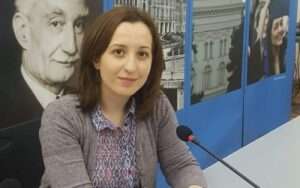
Maia Begashvili
academic head of the organization, national delegate of the European Association of Psychotherapy in Georgia; Doctor psychotherapist with state certification of Georgia; ECP Psychotherapy European Certificate Holder, ECIP Psychotherapy European Certificate Holder; Expert of the Committee of Members of the European Association of Integrative Psychotherapy. Member of the Society for Research on Integrative Psychotherapy (SEPI).
Nino Kobakhidze,
Head of the program "Mental Health Educational Programs for Georgia". Board member of the Georgian Federation of Psychotherapy. Member of the scientific-research committee of the European Psychotherapy Association. European Certificate of Integrative Psychotherapist (ECIP).
Liesbet Plissart
Guest trainer of the Academy. Chief Supervisor of the Metanoia Institute, London. +25 years of practice in the field of integrated psychotherapy. Holder of the European certificates of psychotherapy ECP, ECIP. Specialized in interpersonal neurobiology with Dan Siegel. Active member of GAINS (Global Association for Interpersonal Neurobiology); Certified Emotion-Focused Couples Therapist (ICEEFT); Certified Gestalt Practitioner in Organizational Direction (EAGT).
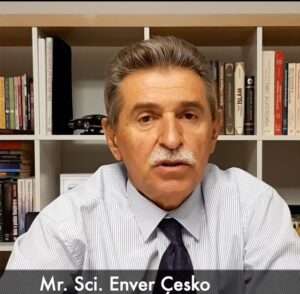
Enver Cesko
Academy guest trainer. Board member of the World Council of Psychotherapy (WCP). President of the Psychotherapy Association of Kosovo. Author of about 150 scientific articles. Member of the Board, Membership Committee and Ethics Committees of the European Association of Psychotherapy. ECP – certified psychotherapist of the European Association of Psychotherapists, WPC – certified psychotherapist of the World Association of Psychotherapy.
OANA MARIA POPESCU
is a trainer and supervisor specialized in integrative psychotherapy, hypnotherapy and expressive psychotherapy, holder of the European Certificate of Psychotherapy (ECP). She is the training standards officer and registrar of the European Association of Integrative Psychotherapy (EAIP), and the co-chair of the membership committee for this organization. Oana is the founding president of the Association of Integrative Research, Counselling and Psychotherapy (ACCPI) from Romania, a direct member of the European Association of Psychotherapy (EAP), a member of the Society for the Exploration of Psychotherapy Integration (SEPI), the European Association of Hypno-Psychotherapy (EAHP), the European Interdisciplinary Association for Therapeutic Services for Children and Young People (EIATSCYP), the American Psychological Association (APA), International Society of Political Psychology (ISPP) and the Romanian College of Psychologists (CPR). She is also a member of the ethics committee for the Romanian Psychotherapy Federation and a member of the editorial board of the European Journal for Qualitative Research in Psychotherapy. Oana Maria Popescu is the author of many books and articles, among which “Integrative Strategic Psychotherapy. Volume 1. Theory and practical applications”, “Integrative Strategic Psychotherapy. Volume 2. Adult Psychopathology”, “Integrative Strategic Psychotherapy. Personal Development Notebook”, “Common Factors in Psychotherapy. The Integrative Strategic Perspective”, “Supervision in Integrative Psychotherapy”, “Manual of Integrative Psychotherapy”, “Approaches in Integrative Psychotherapy”, etc.
Corina Levu
2024–present: President of the Romanian Federation of Psychotherapy. 2024–present: Scientific Secretary, Association for Integrated Research, Counseling and Psychotherapy 2023–present: Vice-President of the European Interdisciplinary Association for Therapeutic Services for Children and Young People (EIATCYP) 2021–2023: Scientific Secretary of the European Interdisciplinary Association for Therapeutic Services for Children and Young People (EIATCYP).
Nino Gurgenidze
Doctor, Psychotherapist, Clinical Director of Tbilisi Children's Infectious Disease Hospital, licensed by the State of Georgia, 2019-2020. Acad. N. Clinical marketing expert of Kipshidze Central University Clinic. 2013 - 2019 Deputy Director of Tbilisi Children's Infectious Disease Hospital in the medical field.
Anano Niauri
Legal advisor of the Academy. Doctoral student of Tbilisi State University. Master of Laws of the University of Strasbourg. Master of Law of Tbilisi State University. A lawyer of general specialization.
Bruno van den Bosch
Bruno Van den Bosch (Belgium) is the Director of the European Association for Integrative Psychotherapy (EAIP). He is also the Chair of the EAP Membership Committee of the European Association for Psychotherapy (EAP) and Co-Chair of the EWAO Committee on Broad Accreditation Organisations.
Founder and General Manager of the organization Educatieve Academie vzw. Founder, professor and lecturer of the training program Interactionele Vormgeving;
Has over 35 years of practical experience in individual, couple, family and group therapy.
He is the co-author of the book "Veranderende Denkbeelden in de Psychotherapie" (2008), which is dedicated to integrated psychotherapy.
Carolina Becerril Mayfair
Carolina Besseghil Mayfair (France) is an ECP certified psychotherapist, Doctor of Clinical Psychology, Doctor of Psychoanalytic Psychotherapy, and psychotherapist in the fields of psychodrama and sociodrama.
International class trainer with many years of teaching and therapeutic experience. Founder and head of the CEPSY Moreno training center for psychodrama, group therapy and action techniques.
Partners
 English
  ქართული



 My Account